What Plantation Shutters Cost in Zionsville and Why They Last
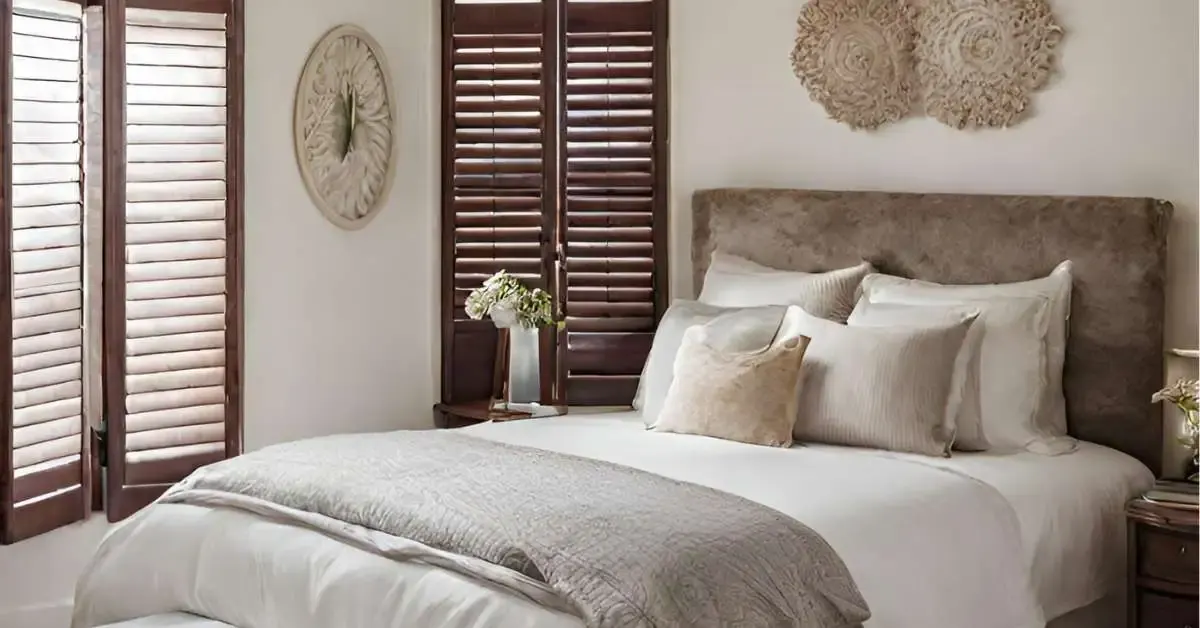
Two houses can order the same shutters and end up with rooms that look nothing alike. Louver width, panel count, frame profile, and the height of the divider rail do more to a room than the color ever will. Most of those choices are better made window by window than settled once for the whole house. Here's how the pieces actually read in a Zionsville home, room by room.
What you're actually paying for
A shutter isn't a window covering in the way a shade is. It is a piece of millwork built to the size of one specific opening, with stiles, rails, louvers, a tilt mechanism, hinges, and a frame. That's a lot of material and a lot of machining before anybody drives to your house. Custom coverings that get measured in the home and installed run roughly $250 to $2,600 a window nationally, and shutters live at the upper end of that band almost without exception.
The other half of the answer is that there is no cheap version. Stock blinds and shades in the $60 to $600 range exist because a factory can cut a standard size and put it in a box. A shutter has to fit an opening that is almost certainly out of square, so there's nothing sitting on a shelf to pull the price down. When a quote for shutters looks low, the thing to check is what got left out.
Where the money moves
- Size. Price tracks the square footage of panel being built, so a tall stairwell window costs multiples of a small bath window.
- Material. Composite generally lands lower than hardwood. A stained hardwood panel is the most expensive combination on the list, because stain is a multi step finish on a natural material that has to be color matched.
- Panel count. Splitting a wide opening into four panels instead of two adds stiles, hinges, hardware, and labor.
- Frame style. A deco frame is more material than an L frame. Direct mount is the least expensive and the least forgiving.
- Shape. Arches, angles, cathedral tops, and anything else that isn't a rectangle get templated by hand and priced accordingly.
- Divider rails and T posts. Each one is an added part and an added operation.
None of that is padding. It's the reason two quotes for the same Zionsville house can differ by a wide margin while both are honest. Ask for the configuration in writing so you can compare like against like.
Deciding what to do first
Almost nobody shutters an entire house at once, and there is no reason to. The usual order is the rooms where you sit and the windows the street can see into. A living room and the front facing bedrooms come first. Bathrooms come next because composite solves a problem there that fabric never solves well. Closets, laundry rooms, basement openings, and anything behind a door usually get a simpler covering, and nobody misses the difference.
Phasing has one catch worth knowing. Finishes are produced in batches, and a white ordered in 2008 can sit slightly off a white ordered two years later, particularly on stained hardwood. If you know you will be doing the house in stages, ask for the finish code to be recorded on the order, and keep a copy. It costs nothing and it saves an argument later. Plenty of homeowners around Zionsville and the rest of Boone County do exactly this and finish the house room by room over several seasons.
Shutters are the most expensive thing on the price list and the last thing most people ever replace. That's a trade worth making on the windows you look at every day, and worth skipping on a closet window nobody sees. Zionsville Window Treatments will price the rooms separately so you can decide in what order to do them. We are insured and insured, and the quote is written. Reach us at (317) 863-9966.
Why they hold value
Shutters are the only window covering people generally don't replace. Fabric fades and eventually gets tired, and cords wear out on anything that lifts. A roller shade has a service life measured in years. A shutter panel is wood or polymer with a mechanical tilt, and when a tilt goes stiff it gets adjusted rather than thrown out. Repainting a hardwood panel is possible. Rehanging a panel on fresh hinges is a bench job.
There's a light and heat argument too, though it should be stated carefully. Closed louvers put a solid layer between the room and the glass, which cuts direct sun and slows the heat that comes with it. Sunlight is a major contributor to fading in floors and furniture, so closing louvers on the hard sun side reduces and slows that damage. No window covering does more than that.
Hardwood against composite, on cost
Composite is the value answer in most rooms. It is dimensionally stable in humidity, so it holds up over a kitchen sink or in a bathroom where a hardwood panel can move enough to bind against its frame. The trade is a limited palette of whites and neutrals, and more weight per panel, which means wide composite panels need a hidden aluminum reinforcement in the rail to stay flat.
Hardwood costs more and earns it in two situations. The first is when you need a stain or a specific paint color to match existing trim. The second is a wide opening where hardwood can carry a broader panel, letting you use fewer panels and put less vertical wood in the view. A house in Zionsville with painted white trim throughout is usually a composite house. A house with stained casing is usually a hardwood house.
What a fair quote looks like
Indiana has no statewide license for this trade, so a license number isn't the thing to ask for. Anyone telling you otherwise is selling something. What's real is the Indiana Home Improvement Contract Act, which applies to residential work over one hundred fifty dollars and requires a written contract with a detailed scope of work plus firm dates and a total price. Use it. A shutter order should name the material, the louver width, the frame style, the panel configuration for each opening, the divider rail height, and the finish.
Ask two more questions. Who does the install, and what happens if a panel arrives with a defect. Custom lead times run two to five weeks, and a remake runs that clock again, so it is better to know the policy before you need it.
Frequently Asked Questions
What louver size should I pick if I can't decide?
Take the 3 1/2 inch louver. It's the default for a reason. It looks right on a standard bedroom or living room window without overwhelming a small opening, and it leaves a reasonable amount of open glass when the louvers are tilted flat. Go up to 4 1/2 inch only on tall or wide openings where you really want the view, and drop to 2 1/2 inch on small windows or in a traditional house where a fine grained look suits the trim you already have.
Do shutters work on a window that is out of square?
Yes, and that's exactly what the frame is for. Almost every opening in a real house is out of square by some amount. The shutter frame is built square in the shop and shimmed square in your opening. The leftover gap behind it gets caulked or covered by the flange itself. The panel then hangs inside a true rectangle. A direct mount install with no frame is the one option that can't absorb an out of square opening, which is why the diagonals get measured before that option is offered.
Can I get shutters without a divider rail?
On a short panel, yes. On a tall panel it is a bad idea. The divider rail stiffens the stiles and keeps the tilt mechanism working smoothly over years of use. Without it a tall panel gets loose and the louvers stop holding their angle. There's also a practical loss. A divider rail is what lets you close the bottom for privacy while the top stays open for daylight, and once people live with that they rarely want to give it up.
How long do shutters take to arrive?
Two to five weeks is typical, because the panels are built to the measurements taken in your home rather than pulled off a shelf. Stained hardwood usually runs toward the longer end because the finishing takes extra steps. Nothing here needs to happen this week, so build the wait into your plans. If a room needs coverage in the meantime, temporary paper shades are cheap and they come down without leaving marks.
 What Motorized Shades Cost in Zionsville and Where They Pay
 Wood Blind Pricing in Zionsville: Stock Versus Custom Cost
 Designing Custom Drapery for Zionsville Rooms, One at a Time