Designing Custom Drapery for Zionsville Rooms, One at a Time
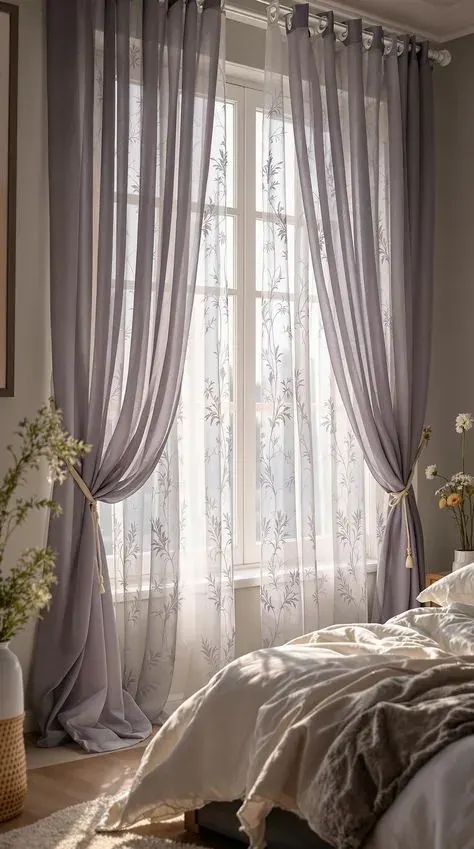
Custom drapery is the one window covering that is genuinely made rather than bought, which means the decisions all happen before anything is cut. Pleat style, fullness, lining and finished length are locked in at the measure, and none of them can be fixed later with a steamer. This is what a good workroom needs to know, and what a good measure in a Zionsville home has to establish before the fabric is even ordered.
Drapery does something no shade can do
A shade covers a window. Drapery softens a room. That difference is the whole design case, and it is why a room with good blinds and no fabric often still feels hard. Fabric absorbs sound and gives the eye something to land on, and it makes a window look like it belongs to the wall instead of being a hole cut in it. Here is where it earns its place in a Zionsville house.
Primary bedroom
Drapery in a bedroom is doing a job, not just decorating. A lined or blackout lined panel closed over a room darkening shade gets you a genuinely dark room, because the fabric covers the edges the shade cannot. Give it real overlap in the middle and proper returns at the wall, or the light will find those two gaps every time.
Float the panels here, since they get drawn nightly and a dragging hem wears out at the corners. If you want the room quieter as well as darker, interlining is the upgrade that does it.
Fabric weight and how it falls
Heavy fabrics hang straighter and hold a pleat better. Linen moves with humidity, which means a panel that kissed the floor in a damp month may drag in a dry one, so linen panels usually get floated rather than kissed. Velvet is heavy and needs strong hardware. Sheers need more fullness than anything else to look right. Whatever you choose, expect the workroom to want it hung, steamed and tied for a few days so the pleats train.
Across Zionsville and IN communities, the houses where the drapery looks effortless are almost always the ones where the rod went up high, the panels went up wide, and the hem was measured to the actual floor rather than to a number on a page.
Spend on length and fullness before you spend on fabric, because height and hem are free decisions that change everything. Then decide whether the panels really need to draw at all. Zionsville Window Treatments quotes fullness, lining and hardware as separate lines so you can see the tradeoffs. We are insured and insured. Call (317) 863-9966 for a measure in Zionsville.
Kids rooms
Keep it simple and keep the cords out of the picture. Stationary panels beside a cordless shade give softness with nothing hanging loose, and cordless product built to ANSI/WCMA A100.1-2022 is what to ask for on the shade underneath. Float the hem so a panel is not dragging across a floor covered in toys.
Kitchens and baths
Mostly no on full drapery. Grease, steam, splashes and the general reality of a busy room all argue for something wipeable. A short stationary panel or a fabric valance can add softness on a window away from the range, but a floor length panel next to a cooktop is a mistake you clean around for years.
Layering rules that always apply
- Mount high. Somewhere between the top of the trim and the ceiling makes the window taller, and that is a free improvement.
- Mount wide. The panels should stack on wall, not on glass.
- Measure the projection of whatever is already on the window before choosing brackets, since a deep fascia will not clear a standard bracket.
- Install the shade first, then measure the drapery to what is really there.
- Keep lining color consistent across the front of the house so the exterior reads as one thing.
Stationary panels or functioning drapery
This is the first question and most people answer it backward. Functioning drapery is drapery you actually draw, so it needs full fullness, real hardware, a planned stack back and enough wall to stack onto. Stationary panels never move, and they can be made at lower fullness because nobody ever sees them from the side.
In a Zionsville house that already has shades on the windows, stationary panels are usually the right call everywhere except the bedroom. The shade handles light and privacy. The fabric handles the room. You spend less on yardage and less on hardware, and the window still looks finished.
Dining room
This is where formality is welcome. Pinch pleats or goblet pleats, with a heavier fabric and interlining if the budget reaches it. A dining room is used at night more than during the day, so the panels being closed is part of the look rather than a compromise. Longer breaks work here because nobody is walking through the fabric.
Home office
Fabric at the window helps a room with hard surfaces and a lot of video calls, because it takes the edge off the echo. Stationary panels on each side, with a solar shade doing glare control, is the arrangement that works. Avoid a bright white panel directly behind a desk chair, since it becomes a glowing rectangle on camera.
Living room and family room
Almost always the highest return in the house. Mount the rod near the ceiling and run it well past the trim on both sides so the open panels sit on the wall rather than on the glass. In most cases the panels here can be stationary, with a roller or a woven wood shade doing the actual light control. That combination costs less than functioning drapery and looks better than either piece alone.
Float the panels about half an inch off the floor if anybody draws them, or take them to a soft break if they never move. Keep the lining consistent with the rest of the house so the exterior view stays uniform.
Frequently Asked Questions
What fullness should custom drapery be made at?
Two to two and a half times the width the panel covers is standard for pleated drapery, and sheers usually want two and a half or more because thin fabric at low fullness looks flat. Below two times the waves flatten out and the pleats pinch, so the panel reads cheap even in expensive cloth. Above two and a half you are mostly paying for fabric that sits in the stack. Ripplefold is specified as a percentage instead, with eighty or one hundred percent common.
What is stack-back and why does it matter?
Stack-back is the amount of wall the panels occupy when they are fully open. It grows with fullness, fabric thickness, lining and pleat style, and it is the reason so many drapes end up covering part of the glass all day. The fix is to run the rod wider than the opening so the open panels land on wall instead of window. Where there is not enough wall on both sides, a one-way draw stacking to the open side solves it.
Which floor break should I choose?
Float the hem about half an inch off the floor for anything you draw daily or for a house with pets, since a dragging hem wears at the corners. A kiss length just brushing the floor looks beautiful but demands a level floor. A one to two inch break is forgiving on uneven floors. A puddle of three inches or more suits stationary panels only and collects dust. Measure to the floor in several places, because floors are rarely level.
Can drapery hang over blinds or shades I already have?
Yes, and it is how most drapery gets installed. The one thing to check is projection. Measure how far the existing headrail, cassette or fascia sticks out from the wall, then choose a bracket with enough projection that the panel never rubs it. A standard bracket often will not clear a deep fascia. Mount the rod higher and wider than the shade so the stack sits off the glass, and if the shade is motorized keep the battery access reachable.
 What Motorized Shades Cost in Zionsville and Where They Pay
 Wood Blind Pricing in Zionsville: Stock Versus Custom Cost
 What Plantation Shutters Cost in Zionsville and Why They Last