Blind Repair & Restring

Blind Repair & Restring Serving Zionsville, IN

Restring where it's honest, replacement where it isn't

Call (317) 863-9966Get Free Quote
Quick Answer

What follows covers the practical side of this service: how it's measured, what changes the price, how long fabrication takes and what maintenance it needs once it's hanging.

  • Service: Blind Repair & Restring for Zionsville homeowners
  • Service area: Zionsville, IN and surrounding areas
  • Honest structure: the measure happens on a normal appointment, the factory takes two to five weeks to build your order, and then we install. Service work on something already hanging moves much faster because nothing needs fabricating.
  • Insured and bonded
  • Serving Zionsville, IN since 2008
Blind Repair & Restring Services

Expert Blind Repair & Restring for Zionsville Homes

Zionsville has more repairable stock than its median home value of $587,800 suggests. Some 20.6 percent of the housing was built between 1940 and 1979, with 10.9 percent in the 1970s alone, and much of that arrived with the 2010 reorganization that folded in Eagle and Union townships along with about 12,000 residents and 50 square miles of mostly rural ground. Colony Woods on its own holds 302 houses established 1976 through 1986. Blinds in that stock are frequently on their second or third set of ladder strings, and a restring costs a fraction of replacement without waiting on custom fabrication.

Sometimes the honest answer is that we shouldn't repair it. Headrails, cord locks, tilt mechanisms and wand assemblies get discontinued, and a blind ordered through a builder in 2008 may use a part no longer made by anyone. We can often improvise a lift, but we won't fit a mechanism that doesn't belong in that headrail and call it fixed, because it fails again and you've paid twice. When we get there and find the part isn't available, we tell you on the spot and price the replacement instead. That conversation is better had in your hallway than after a deposit.

When to Call

Signs You Need Blind Repair & Restring

If you notice any of these in your Zionsville home, it is worth booking a measure. None of it is urgent, and none of it fixes itself either.

The tilt wand spins and nothing turns

One patio blind has been broken since you moved in

The blind lifts fine but won't come back down straight

A cordless shade has gotten hard to raise

A roller shade slips under its own weight

Cords were cut off for safety and now nothing lifts

Slats near the top have gone yellow against the rest

A knot somebody tied years ago runs through the mechanism

A wood blind over the sink has started to cup

A headrail has dropped at one end

Our Process

How Zionsville Window Treatments Handles Blind Repair & Restring

Every job follows the same five-step process. Transparent, thorough, and done right the first time.

1

Failure inspected where it hangs

2

Repair or replace called honestly

3

Cord access rechecked to standard

4

Brackets refastened and leveled

5

Slat stack cleaned before rehanging

Real Project Photos

Blind Repair & Restring in Zionsville

Photographs from real blind repair & restring jobs completed by our crew in Zionsville and surrounding areas.
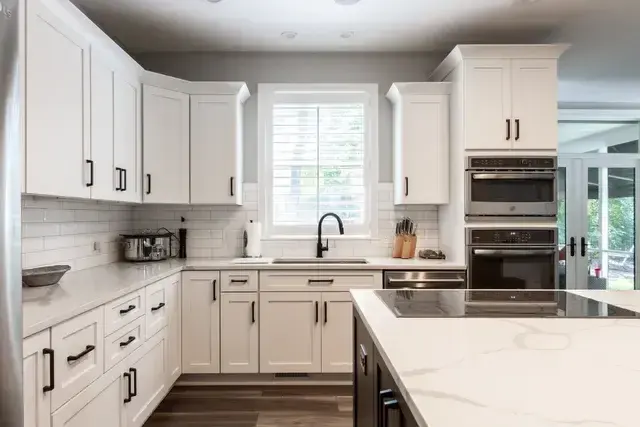
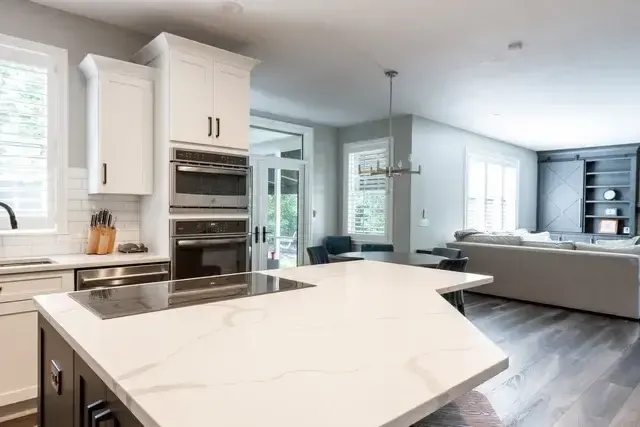
Custom shades measured and installed in ZionsvillePlantation shutters fitted to a Zionsville windowCellular shades in a Zionsville living room
Scope of Work

What Blind Repair & Restring Includes

Every Zionsville job is documented item by item. Here is what the crew covers.

The blind looked at in place first, since half of what gets called a broken blind is a bracket that has worked loose

Manufacturer and product line identified from the headrail label or the hardware before any part is chased

Part availability checked against current production before a repair is scheduled, not after the visit

The honest call made out loud when a part is out of production and no equivalent exists

Repair cost weighed against the national custom range so you can see when a new unit is the better spend

Lift cord replacement done with the correct diameter and lay, because a substitute cord binds in the lock

Cord lock inspected for a worn cam, which is the actual reason most blinds stop holding position

Ladder strings checked end to end, since a broken ladder is what leaves one slat hanging low

Tilt mechanism, wand tilter and gear diagnosed separately rather than replaced as a set out of habit

Bottom rail plugs, end caps and valance clips replaced where age has made them brittle

Vertical vane carriers, stems and the traverse cord checked as a unit on a track that has gone stiff

Roller clutch and idler pin examined on a shade that slips or drifts down under its own weight

Chain tensioner refastened to the wall per the manufacturer instruction wherever a continuous loop is in use

Cord access checked against ANSI/WCMA A100.1-2022 rather than left the way it was found

Slat and vane replacements matched to the existing run where the color is still made, with dye lot variation disclosed first

Fabric and slat condition assessed honestly, because restringing a sun-damaged blind buys you very little

Work quoted per unit after inspection rather than off a phone description, and never against a made-up range

Every repaired unit raised, lowered and tilted through its full travel before we leave the room

Pricing

What Blind Repair and Restring Costs in Zionsville

There's no published national range for blind repair, and inventing one would be dishonest, so we don't. Repair prices per unit, after somebody has looked at the actual blind and identified the actual failure. What we can give you is the comparison that decides it. National figures put stock blinds and shades near $60 to $600 a window and custom-fabricated units at roughly $250 to $2,600. When a repair on a mid-range blind approaches the cost of replacing it, replacing it is the better call and we'll say so rather than take the work. A run of similar units in one Zionsville house prices better together than one at a time, and Zionsville Window Treatments will tell you which of your Boone County blinds are worth the parts.

By Product

How Blind Repair & Restring Differs by Product

Every product in this trade behaves differently in a room. Here is what that means for this work.

Lift cord replacement: New cord run through the headrail, the lock, the slats and the bottom rail, tied and finished the way the factory did it. The right diameter matters. A cord even slightly off spec drags in the lock and creates the exact problem you called about.

Cord lock rebuild or swap: The lock is the small toothed mechanism that grips the cord when you pull sideways. Its cam wears, and a worn cam is why a blind creeps down after you set it. Swapping the lock is often the whole repair, and it doesn't need a restring to go with it.

Ladder string replacement: The ladder is the pair of strings holding each slat and doing the tilting. When one side breaks a slat hangs, and no amount of lift cord work fixes it. Replacing a ladder means threading the whole stack, which is why it costs more than it sounds like it should.

Tilt mechanism and wand tilter: The gear that turns the ladders, plus the tilter the wand plugs into. These fail separately from the lift, and diagnosing which one is actually stripped saves replacing a part that was fine. A wand that spins freely is usually the tilter, not the gear.

Cordless spring service: The constant-force spring in a cordless headrail loses tension across years of use, which shows up as a blind that won't stay up or that creeps. Some systems accept a new spring assembly and some don't, and which one you own decides whether this is a repair at all.

Roller clutch and idler: On a roller shade the clutch holds position and the idler pin carries the other end. A shade that slips under its own weight usually wants a clutch. A shade that has started to telescope across the tube usually wants the brackets checked for level first.

Vertical carrier and stem repair: Verticals fail at the carrier, at the stem that holds the vane and at the traverse cord that drags the stack. Individual carriers replace on most tracks, which is what makes verticals worth repairing on a wide patio opening rather than replacing whole.

Slat and vane replacement: Individual damaged slats or vanes swapped from current stock where the line and the color are still made. Two cautions: production colors drift between runs, and a new slat in the middle of a ten year old blind can read slightly different in daylight.

Bracket and hardware refit: Loose brackets, stripped fixings and a headrail that has dropped at one end. This is the least glamorous category and one of the most common, and it's frequently the entire fault behind a blind somebody has written off as broken.

Valance, end cap and small parts: Clips, plugs, end caps, hold-down brackets and wands. Plastic gets brittle with age and sun, and a missing clip is why a valance sits crooked. These are cheap parts and the availability question is the same one as everywhere else in this category.

Common Questions

Blind Repair & Restring FAQ

Questions we hear most often from Zionsville homeowners considering blind repair & restring.

Ladder strings and lift cords on horizontal blinds are routine, whether the slats are aluminum, basswood or a composite. Cord locks and tilt mechanisms are usually replaceable if the part is still made. Cellular and pleated shades can be restrung, though the fabric has to be sound where the cords pass through, because a cell wall that's already torn at the cord hole will tear again. What can't be restrung is a shade whose fabric has failed, a bent headrail, or a roller tube that's out of true. On a Colony Woods blind from the 1976 to 1986 era the fabric usually decides it.
We identify the headrail and the mechanism first, which usually means opening an end cap and looking, not guessing from a photo. Manufacturers stamp or mold identifiers into the parts, and the profile itself narrows the field. From there it's a question of whether the line is still supported. Product installed during the 2005 to 2015 subdivision wave in Zionsville is often still serviceable. Anything from the 1976 to 1986 Colony Woods era usually isn't in its original form, though a generic mechanism sometimes fits a common profile properly rather than approximately.
Better than you'd think if the house is from the big build wave, worse if it's older. Builder supplied blinds in the 2000 to 2019 stock, which is 43.5 percent of Zionsville's housing, generally came from a small number of large manufacturers whose parts are still in circulation. Builder blinds from the 1970s rural stock that came into town with the township reorganization are a different matter. Bring us the blind or let us look at it in place, and we'll tell you which category it's in before anything is ordered.
Often not, and we'd rather say so. A restring is labor, and labor doesn't scale down with the value of the blind. On a builder grade aluminum blind in a lower level room the repair can cost more than the blind is worth, and replacing it with a stock product is the sensible answer. Where a restring plainly wins is on a custom blind that was expensive to begin with, on a matched set where one unit has failed, or on a hard to source size. We do the arithmetic in front of you rather than quoting the repair by reflex. In a lower level room at Eagles Nest, where 550 houses carry the same builder grade product, replacement is often the sound call.
Ladder strings on wide horizontal blinds, and it's a wear pattern rather than a defect. The ladders carry the slat weight and flex at every raise, so a blind in a room that's operated twice a day fails years before the same blind in a guest room. The second most common is a cord lock that slips, which shows as a blind that drifts down after you set it. In lower level rooms, which most of this town's subdivisions have, the third is corrosion on metal components where the air runs cooler and damper. We see all three most in the 2000 to 2019 stock, 43.5 percent of Zionsville's housing.
Repair, yes, and that's the best outcome because nothing changes visually. Replace, with a warning: a new blind ordered years after the original will differ in dye lot even when the color name is identical, and next to seven originals in one room that reads. On a Colony Woods room with a wide picture opening flanked by narrower units, a single replacement stands out badly. Where a set has to be broken, we'd rather move the odd one to a less visible opening in the house and put the new unit where it's least noticed.
Sometimes, and we'd rather tell you no than take the work. The test is straightforward. If the slats or the fabric are sound, if the color is still one you like, and if the failure is a cord, a lock, a ladder or a bracket, repair is usually the better spend. If the material has gone brittle or faded, if the line was discontinued years ago, or if the repair approaches the cost of a new unit, a replacement blind is the honest answer. Somebody who never recommends against a repair is selling parts, not judgment.
Then repair isn't the honest answer, and you should hear that on the phone rather than after a service call. Window covering hardware gets discontinued regularly, and a specific cord lock or tilt gear from a manufacturer who left the market fifteen years ago may simply not exist in any warehouse. Sometimes an equivalent part fits. Often it doesn't, because headrail profiles are proprietary. We identify the product first, check availability, and only then talk about scheduling.
Almost always the cord lock. It's a small mechanism in the headrail that pinches the lift cord against a toothed cam when you pull the cords toward the side of the blind. The cam wears smooth over years, and once it does, the cord slides and the blind drifts down. It's a common failure and often an inexpensive one. The other candidate on a cordless unit is a tired constant-force spring, which is a different repair with a different answer about parts.
Yes, and it means a ladder string has broken. The ladders are the two thin strings that cradle each slat and do the tilting, and when one gives way the slat it was holding drops out of line. Fixing it means running a new ladder through the whole stack rather than patching one rung, which is why it takes longer than a lift cord replacement. On a blind with several broken ladders, the labor starts to argue for a new unit.
Usually not, and it's important to say that clearly. Cordless lift depends on a constant-force spring sized at the factory to the finished weight of that exact blind, mounted in a headrail built to hold it. It isn't a kit you add to a corded headrail. If the reason you're asking is a child or a pet in the room, the right answer is a new cordless product for those openings. That's a real cost, and we'd rather quote it than pretend a conversion exists.
Yes, that's most of this work. What we need is the manufacturer and the product line, which is usually on a label inside the headrail or stamped on the hardware. Bring us a photo of that label and a photo of the failure and we can tell you a lot before anyone drives anywhere. Where there's no label at all we can often identify the line from the hardware profile, and where we can't, we'll say so instead of guessing at parts.
If the line and the color are still in production, closely. Exactly is a different claim. Manufactured components run in batches, and color drifts slightly between them, so a new slat next to slats that have had ten years of daylight on them can read a shade off under strong light. In the middle of a stack that's usually invisible. At the bottom rail where you look at it every day, it can bother you. We'll tell you which case you're in before ordering.
The stems in the carriers wear out, and once a stem loses its grip the vane drops. It's the most common vertical failure and it's very repairable, because carriers replace individually along the track. What we check at the same time is the traverse cord and the carrier spacing, since a track that has gone stiff usually has more than one tired carrier. On a wide patio opening this repair is far cheaper than a new track, which is exactly why verticals stay in service so long.
Small hardware work is often done in the room in one visit. A restring or a ladder replacement is bench work, so the unit comes with us and goes back up when it's finished. Where a part has to be ordered from the manufacturer, the wait is on their shipping rather than on us, and we'll give you a real date rather than a hopeful one. Nothing in this trade needs to happen today, and anyone framing a broken blind as though it does is selling urgency.
Yes, meaningfully. Most of the cost in a small repair is getting to the house and setting up, so five blinds in one visit price better per unit than one blind on five visits. If you have a few that are limping along, it's worth walking the house and listing them before we come out. It also lets us give you one honest recommendation about which ones are worth parts and which ones have reached the end of their life.
Sometimes. On some systems the spring assembly is a serviceable part and it can be replaced, which restores the original feel. On others the spring is integral to the headrail and there is no repair path at all. Which one you own is a manufacturer question and we check it before quoting. It's worth knowing that this is a wear item rather than a defect, and a cordless blind that has held its position for a decade has done its job.
Cellular and pleated shades run internal lift cords through the cells, and they do break. Restringing one is genuinely fiddly, since the cord has to be threaded through every cell without twisting, and the fabric itself gets fragile with age. On a shade that's a few years old this is usually worth doing. On one that's a decade old with sun on it, threading a new cord through tired fabric tends to find the next weak point rather than fix the problem.
It depends on the repair. Bracket work, a cord lock swap on many headrails, valance clips and vertical carriers are all in-room jobs. A full restring, a ladder replacement or anything that means opening a headrail up properly is done on a bench where the parts don't end up in your carpet. When a unit leaves, it gets tagged with the room it came from, because a house with eight identical blinds and no labels is how the wrong one goes back up.
It should be, and that's part of what we check. ANSI/WCMA A100.1-2022 is the current product standard for cord access, and inner-cord non-compliance is treated as a substantial product hazard under 16 CFR 1120.3. What we won't do is claim compliance with a federal custom cord rule, because the rule people usually mean was vacated in court in 2023. What we will do is put a repaired blind back with its cord access no worse than the standard expects, and tell you plainly when a room really wants a cordless product instead.
Areas We Serve

Blind Repair & Restring Across Zionsville

We measure and install in every one of these Zionsville neighborhoods. Each has its own page with the build eras, window conditions and mounting notes for that section.

Free In-Home Measure

Schedule Your Free In-Home Measure in Zionsville

Contact Information

Reach Us Directly

Our team prioritizes scheduled measures and service calls, and books in-home measures during business hours.

Office
1417 Commerce Avenue, Indianapolis, IN 46201
Hours
Mon-Fri 8a-6p
Service Area
Zionsville, IN and Surrounding Areas

Ready to Book Your Measure?

Call us to set up an in-home measure, or to ask about a treatment that has stopped working. We will talk it through on the phone first.

Service area

Serving Zionsville and the surrounding area

Call NowGet Quote