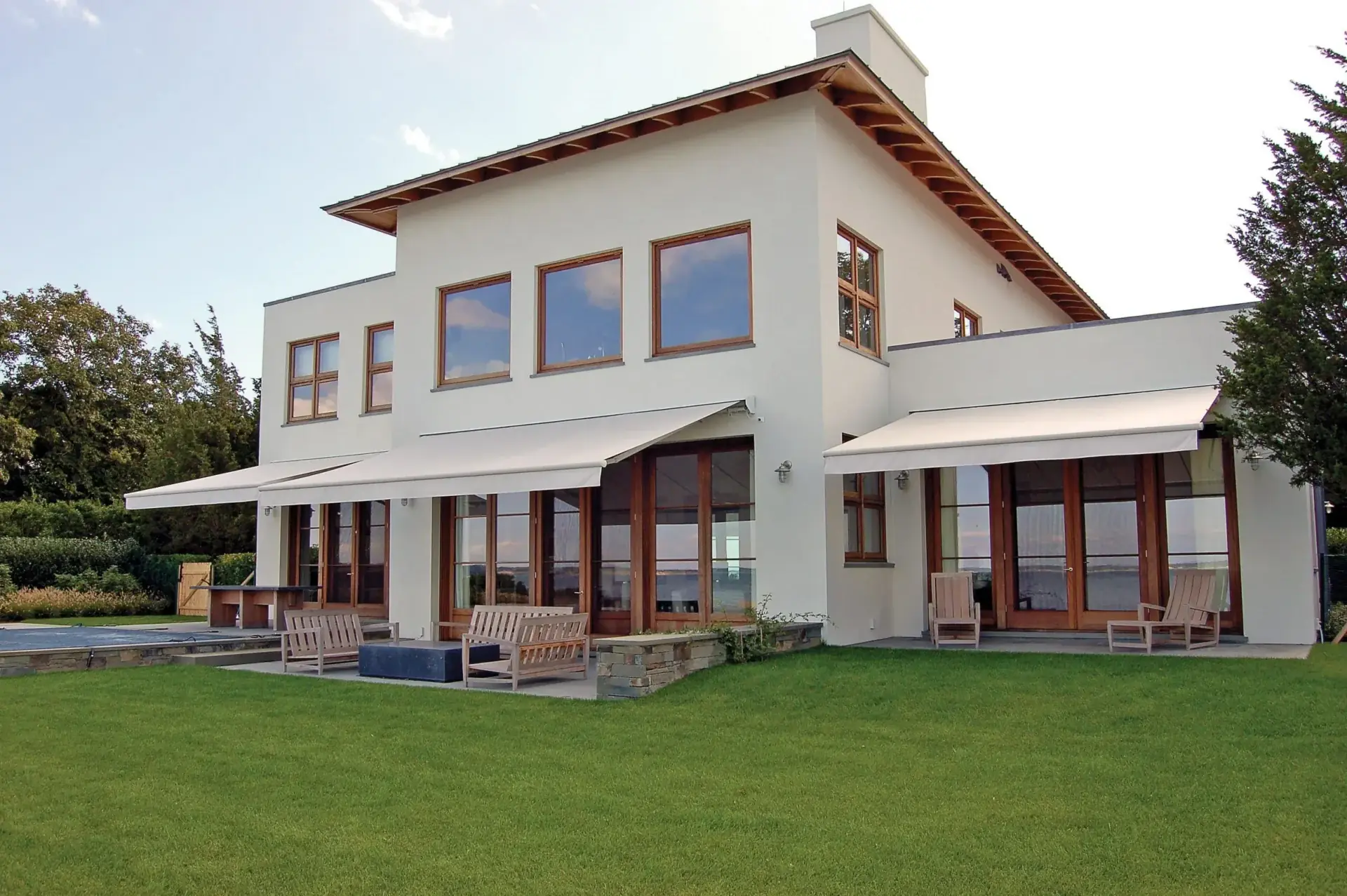
Solar Shades Serving Zionsville, IN
Specified from the sidewalk as well as the sofa
What follows covers the practical side of this service: how it's measured, what changes the price, how long fabrication takes and what maintenance it needs once it's hanging.
- Service: Solar Shades for Zionsville homeowners
- Service area: Zionsville, IN and surrounding areas Nothing in window treatments needs a middle-of-the-night call-out. What matters is the fabrication window, typically two to five weeks. Service and repair work sits outside that and gets handled on a much shorter timeline.
- Insured and bonded
- Serving Zionsville, IN since 2008
Expert Solar Shades for Zionsville Homes
Solar shades solve a problem Zionsville has in two distinct places, and they're not the same problem. On Main Street the five block core runs north to south, so the commercial frontages face east and west and take direct low sun at opposite ends of the day: morning glare onto the west side shopfronts, afternoon glare onto the east side ones. That's raking light straight onto merchandise, and it's the reason a shopkeeper calls. Out in the subdivisions it's the rear elevation, unshaded, facing open ground.
A solar shade is a screen fabric with a stated openness factor, and that number is the specification. 1 and 3 percent cut the most glare and give up the most view. 5 percent is the usual compromise. 10 percent keeps the view close to intact and cuts the least. What's outside the window matters as much as the sun does, which is why we bring openness cards into the room and hold them against your own view rather than against a showroom wall.
Two honest limits. A solar shade works on energy that has already passed through the glass, so it manages glare and radiant heat well and does less about heat load than an exterior product does. And after dark it reverses: in daylight you see out and passersby see very little in, but with lights on at night the room becomes visible from outside through the same fabric. If a room needs both, it needs two treatments.
Signs You Need Solar Shades
If you notice any of these in your Zionsville home, it is worth booking a measure. None of it is urgent, and none of it fixes itself either.
Merchandise in a Main Street window is washing out at nine
The great room is unusable after four in July
Glare off a pond makes the rear rooms uncomfortable
Screens are unreadable at certain hours
You want the view kept and the heat cut
Fairway frontage leaves the rear wall with nothing shading it
Floors have lightened in a band near the glass
Existing sheers do nothing about brightness
How Zionsville Window Treatments Handles Solar Shades
Every job follows the same six-step process. Transparent, thorough, and done right the first time.
Visit at the bad hour
Where the schedule allows, the measure happens when the room actually fails rather than at nine in the morning. Standing in an east facing Main Street shop at half past eight, or a Holliday Farms great room at five in July, tells us more about openness factor than any calculation does. Where the timing can't work, we ask what's outside the glass and how far away it sits, because view distance changes what each openness level looks like.
Hold the cards to the view
You look through 1, 3, 5 and 10 percent samples against your own window. A 3 percent that reads as a clear view across an open fairway can read as a solid panel against a fence six feet away. Fabric color matters too: a dark fabric holds the view and cuts glare better, a light one bounces more heat and looks brighter from outside, which is a real consideration on a storefront.
Measure and plan splits
Three widths, three heights and a diagonal on every opening. On a two story wall we plan the horizontal split lines to land on existing mullions so the divisions look designed, and we confirm how the upper units will be reached. A single shade tall enough to cover both levels is usually wrong on fabric weight alone, before anyone talks about operation.
Settle reach and control
Anything you can put a hand on gets cordless lift, or a continuous cord loop with a tensioner fitted. Anything above reach gets motorized, with the battery arrangement quoted openly, since Hunter Douglas puts PowerView battery life at about one year. On a storefront where the shade should come down at the same hour daily, a sun sensor or an astronomical timer earns its cost quickly.
Write the gap and the fade
The inside mount light gap goes on the quote in inches, and so does the plain statement that the fabric will age. Ultraviolet is roughly 40 to 60 percent of fading damage, so a solar shade slows the fading of your floors, stock and furnishings rather than preventing it, and the fabric itself ages fastest on the elevation that needed it most.
Install and set limits
Brackets level and square to each other, fabric run to full drop and full lift, hem tracking checked over several cycles. On motorized units the upper and lower travel limits get set and then re verified, and scenes get built with you present. Across a shopfront the shades get aligned to each other rather than to a ceiling line the street can't see anyway.
Solar Shades in Zionsville
Photographs from real solar shades jobs completed by our crew in Zionsville and surrounding areas.
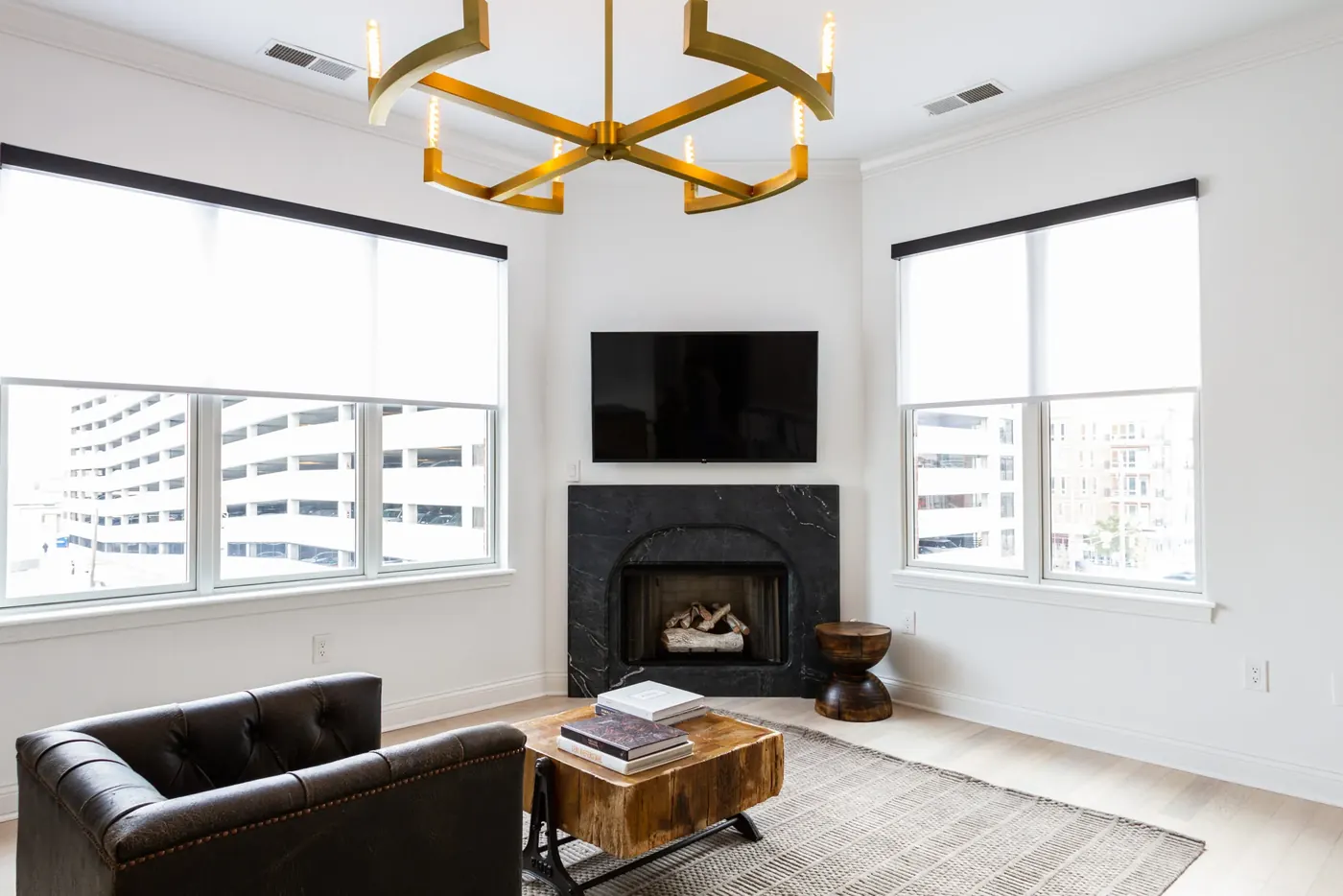
What Solar Shades Includes
Every Zionsville job is documented item by item. Here is what the crew covers.
Every elevation walked and written down, because a west window and a north window don't get the same openness
Openness factor chosen per opening, 1, 3, 5 or 10 percent, rather than picked once for a whole house
Samples held against the actual glare at the hour that room is actually a problem
Fabric color decided alongside openness, since dark yarns read the view and light yarns bounce more light back at you
The view you'd be giving up shown to you through a real sample before the order, not described in words
Night behavior explained plainly, because with interior lights on the shade works in the other direction
Heat expectations set honestly, including what an interior product can't do once sun is already through the glass
Fade language kept accurate, since NFRC puts UV at roughly 40 to 60 percent of fading damage
Three widths and three heights per opening plus a corner-to-corner square check
Mounting depth measured for the tube, the brackets and a cassette if the roll is being hidden
Roll direction set, with reverse roll used where the fabric needs to stand off the glass
Light gap per side disclosed, and flagged as larger on shades over 120 inches or past a 4:1 ratio
Wide sun-facing spans reviewed for coupling so two tubes track together across one opening
Chain side chosen per window, with cordless and motorized offered where a chain doesn't suit
Every continuous cord loop unit gets its tensioner anchored rather than left hanging as a loop
Layering discussed where one fabric can't handle daytime glare and nighttime privacy at the same window
Hembar matched to the fabric so an open weave hangs straight instead of waving at the bottom
Each shade run full travel on install day and checked for centered tracking before sign-off
What Solar Shades Cost in Zionsville
National category figures put stock shades near $60 to $600 a window and custom-fabricated shades roughly $250 to $2,600. Those are published national ranges rather than a quote for a house in Zionsville. Solar shades sit in the middle of that band and the openness number itself barely moves the price. What moves it is the weave and the yarn: a basic vinyl-coated polyester screen costs less than a fine-yarn or a metalized-backed fabric, and width drives everything as usual. Hiding the roll in a cassette adds. Motorization is priced separately, nationally $300 to $1,500 per window installed. Zionsville Window Treatments works from measured openings and real elevations in Boone County, never from an average.
How Solar Shades Differ by Product
Every product in this trade behaves differently in a room. Here is what that means for this work.
1 percent openness: The tightest weave we normally hang. It cuts the most glare and gives up the most view, so the outside reads as a soft haze rather than a scene. Specify it on hard west glass where the afternoon is genuinely unusable.
3 percent openness: Strong glare control with some view left. It's the choice for a home office facing west or south where screens have to be readable through the afternoon, and it's the one people are usually happiest with on the worst window in the house.
5 percent openness: The everyday middle. It keeps a usable view of a yard or a street while taking the hard edge off direct sun. This is the default we start from on most openings before a specific elevation argues us up or down.
10 percent openness: The most open weave, which means the best view out and the least glare control. It suits a north or east window where you want the fabric mostly for daytime privacy and some sun softening rather than for fighting an afternoon.
Dark fabric colors: Charcoal and bronze absorb light rather than scattering it, so the weave holes read as small clear windows and the view through is noticeably better. The tradeoff is that a dark fabric holds more heat at the glass line.
Light fabric colors: White and beige reflect more solar energy back out and keep the fabric cooler, but they scatter light across the weave, which washes out the view and can produce its own soft glare. It's a real choice, not a color preference.
Reverse roll on solar fabric: Rolling the fabric off the front of the tube stands the screen off the glass by an inch or so, which keeps it clear of hardware and lets a little air move in the space behind it. Useful on hot southern exposures.
Cassette headbox: A closed box hiding the tube, which matters more on solar than on other fabrics because an open roll of screen fabric looks like exactly what it is. It also keeps dust out of the weave sitting on top of the roll.
Motorized with a sun sensor: A motor plus a sensor that lowers the shade when the sun actually hits that elevation, or an astronomical timer that runs to sunrise and sunset. It's the version of this product that works when you aren't home to run it.
Layered with a room darkening shade: A second tube on a dual bracket carrying an opaque fabric behind or in front of the screen. The solar shade handles the afternoon, the second shade handles the night, and neither one gets asked to do a job it can't.
See What Each Fabric Does To The Light
Pick a fabric below and the window updates. It's a drawing rather than a photograph, so read it as a rough guide to what each family does in a Zionsville room, and to what it doesn't do.
Openness factor is a measured fabric spec, so you can compare it line to line. The category names are not measured. One maker's room darkening can behave like another maker's light filtering, which is why the sample books come to the measure and get opened in the room they're going in, at the hour that room has the problem.
Solar Shades FAQ
Questions we hear most often from Zionsville homeowners considering solar shades.
Solar Shades Across Zionsville
We measure and install in every one of these Zionsville neighborhoods. Each has its own page with the build eras, window conditions and mounting notes for that section.
Other Window Treatment Services in Zionsville
Zionsville Window Treatments handles the full scope of window treatment work. Explore our other services below.
Schedule Your Free In-Home Measure in Zionsville
Reach Us Directly
Our team prioritizes scheduled measures and service calls, and books in-home measures during business hours.
Ready to Book Your Measure?
Call us to set up an in-home measure, or to ask about a treatment that has stopped working. We will talk it through on the phone first.