Shutter Repair

Shutter Repair in Zionsville, IN With Zionsville Window Treatments

Match confirmed before a single panel is ordered

Call (317) 863-9966Get Free Quote
Quick Answer

This section covers what the product does well, where it struggles, and what it costs to own over time rather than just to buy. All three matter on a purchase you'll live with for years.

  • Service: Shutter Repair for Zionsville homeowners
  • Service area: Zionsville, IN and surrounding areas
  • If a mechanism has failed rather than a whole product, that's a service call and it moves quickly since we're fitting parts rather than ordering a custom build. New orders follow the usual two to five week fabrication.
  • Insured and bonded
  • Serving Zionsville, IN since 2008
Shutter Repair Services

Expert Shutter Repair for Zionsville Homes

Austin Oaks is full of shutters that were made one house at a time. Roughly 270 custom houses went up there between 1997 and 2002 on about 159 acres with no repeating plan set, so the openings don't match from address to address and neither do the shutters fitted into them. Twenty three to twenty eight years on, hinges wear, tilt rods separate from their staples and louver pins loosen enough that the slats stop holding an angle. The Village has the same problem for a different reason, because nothing in a fabric running from 1854 to 1930 repeats at all, including within one house.

Before we schedule anything, we need to establish whether the panel can be matched. Painted whites drift between manufacturers and between production years, and stain lots vary along with them. Louver profiles get discontinued. A panel made for a 1999 Austin Oaks opening may not be reproducible in a way that reads as identical next to the original beside it. Sometimes the better answer is to rebuild the existing panel rather than replace it, and sometimes it's to redo a whole opening so the pair matches each other even if it no longer matches the room. We confirm that first, not after fabrication.

When to Call

Signs You Need Shutter Repair

If you notice any of these in your Zionsville home, it is worth booking a measure. None of it is urgent, and none of it fixes itself either.

Louvers in the middle of a tall panel have drooped

A shutter has dropped at the latch edge

Louvers swing open on their own

One elevation of shutters has yellowed and the rest hasn't

A louver spins loose in its hole and won't stay

Bathroom panels have opened at the joints

Panels catch on each other when you close them

Hinge screws keep backing out of the same panel

A gap has opened at a top corner of the frame

The tilt rod has come away from a louver

Our Process

How Zionsville Window Treatments Handles Shutter Repair

Every job follows the same five-step process. Transparent, thorough, and done right the first time.

1

Manufacturer and louver size identified

2

Panels and frames inspected on site

3

Frame checked against a level

4

Repair scope quoted per project

5

Tilt rod type identified before quoting

Real Project Photos

Shutter Repair in Zionsville

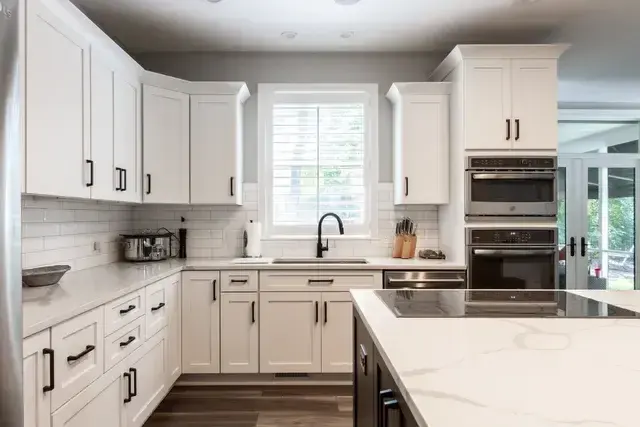
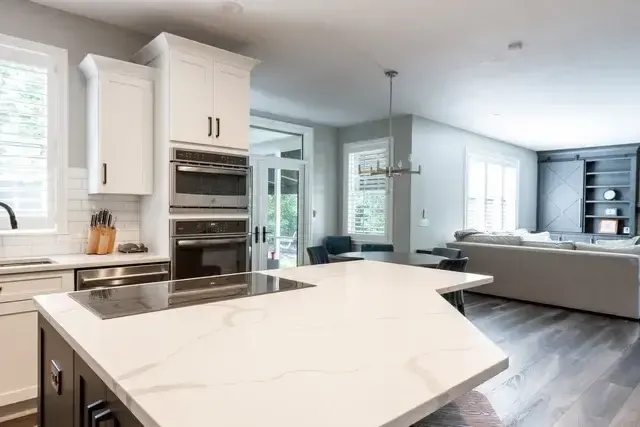
Photographs from real shutter repair jobs completed by our crew in Zionsville and surrounding areas.
Custom shades measured and installed in ZionsvillePlantation shutters fitted to a Zionsville windowCellular shades in a Zionsville living room
Scope of Work

What Shutter Repair Includes

Every Zionsville job is documented item by item. Here is what the crew covers.

Manufacturer, material and finish identified from the panel and the frame before any parts conversation starts

Match confirmed in writing before the visit is scheduled, since an unmatchable panel changes the whole plan

Louver size, frame profile and tilt style recorded, because those three decide whether a replacement panel can exist at all

Existing color compared against the current factory range under daylight rather than under a lamp

Age-related finish shift disclosed up front, as a new white panel next to a fifteen year old one rarely reads the same

Hinges checked for wear, pulled fixings and the sag that shows up first at the latch edge

Panel drop measured against the frame to see whether the panel has settled or the opening has

Louver tension tested one louver at a time instead of judged by feel across a whole panel

Broken louver pins, staples and tilt linkage diagnosed separately, since they fail for different reasons

Hidden rod linkage inspected inside the stile where the tilt has gone loose on a modern panel

Center tilt rod staples and clips checked on traditional panels where the rod has separated from a louver

Magnets, catch plates and strike points replaced where panels no longer hold closed

Frame plumb rechecked with a level, because a house that has settled will hold a good panel out of square

Shims and fixings reset where the frame itself has moved rather than the panel

Touch-up and refinishing limits explained honestly, as a factory finish can be blended and not truly restored

Wet-room damage assessed for what it is, since a hardwood panel that has taken years of shower humidity may be past repair

Work quoted per project after inspection, never against an invented range for a category nobody publishes

Every panel closed, latched and tilted through full travel before the visit ends

Pricing

What Shutter Repair Costs in Zionsville

Nobody publishes a national range for shutter repair, so we won't pretend one exists. This work is quoted per project after somebody has seen the shutters, because a hinge reset and a rebuilt tilt linkage across six panels are not the same job. The number that does help is the replacement comparison. Published national figures for interior shutters run roughly $175 to $800 per window, and when a repair on one opening starts closing on that, replacing the opening is usually the smarter move. The other honest variable is matching. If your panels can't be matched, the choice stops being repair versus replace on one window and becomes a conversation about the whole elevation. Zionsville Window Treatments works that out before scheduling anything in Boone County.

By Product

How Shutter Repair Differs by Product

Every product in this trade behaves differently in a room. Here is what that means for this work.

Hinge replacement and reset: Worn hinge knuckles, stripped fixings and pulled screws in a stile. This is the most common shutter failure by a distance, and it usually shows as a panel dropping at the latch edge and catching on its neighbor. A hinge set and fresh fixings often fix an entire opening.

Louver tension service: The friction that holds a louver where you leave it comes from tension pins or a tension screw in the stile. Louvers that fall open on their own or need two hands to move are tension problems, and most panels have an adjustment before anything gets replaced.

Broken louver replacement: A single cracked or snapped louver swapped out of the panel. This is where matching gets decided. Louver profiles are proprietary and sizes vary by manufacturer, so a louver from a line that has been discontinued is often the thing that ends a repair.

Center tilt rod repair: On a traditional panel the rod is stapled or clipped to each louver, and staples pull out. Reseating them properly means working into the louver edge without splitting it, and on an old painted panel that takes patience and a touch-up afterward.

Hidden rod linkage repair: On a clean-face panel the linkage lives inside the back of the stile, and when it loosens the louvers go out of step with each other. Getting to it means opening the stile, which is real work and part of the honest tradeoff for the look.

Magnet and catch replacement: Panels are held closed by small magnets set into the frame with steel catch plates on the panel. Magnets weaken and plates work loose. It's a small part and a fast fix, and it's the reason a lot of shutters stop sitting flat against their frame.

Frame reset and shimming: Where the opening has moved rather than the shutter, the fix is at the frame. Pulling the fixings, re-shimming to plumb and refastening puts the panels back into a square hole. It's the right repair on an older house that has settled since the shutters went in.

Panel replacement: A single panel remade to the existing frame where the old one is beyond repair. It depends entirely on whether the manufacturer still makes that louver size, frame profile and finish. When they don't, the honest options are a full elevation or living with the damage.

Touch-up and finish blending: Chips, dings and hinge scars addressed with a matched touch-up. Be realistic about what this achieves: a good blend disappears at three feet and is visible at one. Refinishing a factory-finished panel properly is a repaint, not a touch-up.

Wet-room reassessment: Where hardwood panels have spent years in a bathroom, the damage is often in the joints rather than on the surface. We'll tell you when the repair is a composite replacement for that room instead, since fixing the panel doesn't fix the reason it failed.

Common Questions

Shutter Repair FAQ

Questions we hear most often from Zionsville homeowners considering shutter repair.

Sometimes, and we won't promise it before seeing the panel. What we look at is the louver profile, the stile width, the frame type and the finish. Profiles from that era are frequently discontinued, and even where a current profile is dimensionally close, the shadow line reads differently across a room. Finish is the harder half: a painted white from 1999 has aged and a new panel next to it looks brighter for a long time. On an Austin Oaks opening with two panels, refinishing both together often produces a better result than matching one.
Hinge replacement, re seating a tilt rod, tightening or replacing louver pins, adjusting magnets and catches, and re shimming a frame that has moved. Those are same visit jobs on most panels and they solve the majority of complaints. Rehanging a panel that's binding is also routine, though the cause is often the opening rather than the shutter. What isn't routine is anything involving new material, since that waits on fabrication like any custom order, on the usual two to five week timeline. On an Austin Oaks shutter that's twenty five years old, that list covers most of what we get called for.
Almost always friction, and it's fixable. Louvers hold position through tension at the pins and, on a hidden tilt design, through the internal mechanism. Over twenty odd years the pin seats wear and the tension drops, so the louvers fall under their own weight. On a visible tilt rod, the failure is usually the staple that connects the rod to the louver working loose. Both are repairs measured in minutes per panel. If the whole panel has racked out of square, that's a different diagnosis and the louvers are a symptom rather than the cause. It's the most common shutter complaint we hear from the 1997 to 2002 Austin Oaks stock.
It can be ordered on its own, and whether it should be depends on how visible the pair is. A warped hardwood panel usually means the room got wet or humid, so replacing that one panel without changing the specification puts the same product back into the same conditions. In a bathroom or a laundry the right move is a composite replacement, accepting that it will read slightly different from the hardwood beside it. In a conditioned room where one panel simply failed, a single replacement is reasonable if the finish can be matched. In a Village house off Hawthorne Street, the failed panel is usually the one in the bath.
Usually yes, and this is common in Zionsville because 24.3 percent of the housing predates 1980 and the Village fabric is between ninety five and a hundred and seventy years old. A frame set plumb twenty years ago is often no longer plumb relative to the opening around it. The repair is re shimming the frame to true and adjusting the hinge positions, and sometimes trimming a stile edge where the panel now binds. Where the movement has been severe, the panel may need enough material removed that a new frame set is the better answer.
Photographs of the panel from the room and a close view of the hinge and the louver ends, plus anything you know about who supplied them and roughly when. If the original paperwork survived a house sale, that's the fastest route to identifying the line. We also want to know whether the problem is one panel or every panel in the house, because a single failed panel is a repair and a house wide problem is usually the room conditions rather than the shutters. That call saves you a visit that couldn't have fixed anything. Your Zionsville address helps too, since the answer differs between the Village and a 2000s subdivision.
That's the first question we answer, and we answer it before scheduling rather than after. What we need is the manufacturer, the louver size, the frame profile and the finish, and often a photo of the label or the hardware gets us most of the way. If the line is current, a match is likely. If it left production years ago, the louver profile alone can make a replacement panel impossible. Knowing that up front changes what you're deciding, and it's not fair to find it out with a technician standing in your living room.
Not exactly, and anyone promising otherwise is guessing. A white factory finish shifts over years of daylight, and a panel that has faced south for a decade has changed more than the one on the north wall of the same house. Put a brand new panel beside it and you can usually see the difference in daylight, less so under a lamp. On a run of several panels in one opening, replacing all of them keeps the eye happy. In a room where the openings are separated, one new panel is often fine.
Usually yes, and it's the most common call we get. A shutter panel is a heavy hinged assembly, and over years the hinge fixings work in the stile and the panel drops at the latch edge. The fix is fresh hinges, longer or repositioned fixings, and sometimes a small amount of easing at the meeting stiles. What we check at the same time is whether the frame is still plumb, because a dropped panel in a frame that has moved needs both problems solved.
Louver friction comes from tension pins or an adjustable tension screw depending on the maker, and it's designed to be serviceable. On many panels there's an adjustment that restores the hold without replacing anything, which is the first thing we try. Where the pins themselves are worn flat, they get replaced. If the louvers have gone loose across every panel in the house at once, that's usually age doing what age does rather than a defect.
If the line is still made, yes, and it's a satisfying repair. Louver profiles are specific to the manufacturer and the size, so a 3 1/2 inch louver from one maker doesn't fit another's panel even when the dimension matches. On a discontinued line we'll look for a compatible profile and tell you honestly if there isn't one. Where a panel is old and a louver is unavailable, the realistic options become a remade panel, a whole elevation, or leaving it.
We'll look, and the answer is often that the panel isn't the real problem. Hardwood in a room with a working shower takes on and gives back moisture for years, and the damage usually shows at the joints between stiles and rails rather than as a mark on the face. Once those joints have opened, a repair doesn't hold. What we recommend in that case is a composite panel for that room, because putting the same material back in the same conditions gets you the same result on a delay.
Yes, almost all of it. Bring us photos of the panel face, the hinge, any label inside the frame and the failure itself, and we can usually identify the line before anyone drives to Zionsville. What we can't do is promise parts for a maker who has left the market. We'd rather tell you that on the phone and let you decide whether an inspection is still worth it than book a visit that ends in bad news.
Then the house moved, not the shutter. Older stock settles, and a frame that went in plumb fifteen years ago can be sitting out of square now. The repair is at the frame: fixings out, shims reset, refastened to a level and the caulk line run again. It's tidier work than it sounds and it's far cheaper than remaking panels. It also solves the catching and the closing problems that usually come with it.
We can blend a touch-up on chips and hinge scars, and that's genuinely useful. What we won't claim is that a factory finish gets restored on site. Those finishes are sprayed and cured in a controlled shop, and brushing over one gets you a different sheen and a different texture that reads as a repair from a few feet away. Where a whole set really needs refinishing, that's a repaint by a finisher, and we'll be straight about whether the panels justify it.
A hinge reset, a tension adjustment or a magnet swap is a single visit. Anything that needs a part from the manufacturer waits on their shipping, and a remade panel goes into the normal custom fabrication window of two to five weeks. We'll give you a real date and update it in writing if the factory moves. Nothing here is urgent, and a company selling you urgency on a shutter panel is selling you something other than the repair.
Often yes, because the failures buyers notice are cheap ones. Panels that catch, louvers that fall open and a shutter that won't sit flat all read as neglect during a walkthrough, and they're usually hinges, tension pins or magnets. What isn't worth doing before a sale is a full elevation replacement to fix a color mismatch nobody has mentioned. We'll tell you which of the two you're looking at.
More than you'd think on the small stuff. Tightening a hinge fixing, adjusting a tension screw where the maker provides one and reseating a loose magnet are all reasonable. Where it goes wrong is louver replacement and anything involving opening a stile, because the parts are proprietary and the panel is finished. A split louver edge from a screwdriver is a bigger problem than the one you started with. If you're unsure, send a photo before you start.
Insured and bonded, with certificates available before anybody touches your shutters. The one word you won't hear from us about this company is licensed. Indiana has no statewide license covering window treatment work, so there is nothing here to hold, and a firm implying otherwise is worth a second look. The rule that does bite is the Indiana Home Improvement Contract Act at IC 24-5-11. Residential jobs over $150 need a contract on paper naming the work, the dates and the price, and a repair visit is not exempt from that just because it is small.
Then we tell you, and we tell you what the alternatives cost. This is exactly why we confirm the match before scheduling instead of after, because the discontinued-part conversation is one nobody wants to have with a technician already in the room. If we get it wrong and a part turns out to be unavailable once we're on site, you get the honest position and a written quote for the replacement path rather than an improvised repair that will fail again.
Areas We Serve

Shutter Repair Across Zionsville

We measure and install in every one of these Zionsville neighborhoods. Each has its own page with the build eras, window conditions and mounting notes for that section.

Free In-Home Measure

Schedule Your Free In-Home Measure in Zionsville

Contact Information

Reach Us Directly

Our team prioritizes scheduled measures and service calls, and books in-home measures during business hours.

Office
1417 Commerce Avenue, Indianapolis, IN 46201
Hours
Mon-Fri 8a-6p
Service Area
Zionsville, IN and Surrounding Areas

Ready to Book Your Measure?

Call us to set up an in-home measure, or to ask about a treatment that has stopped working. We will talk it through on the phone first.

Service area

Serving Zionsville and the surrounding area

Call NowGet Quote