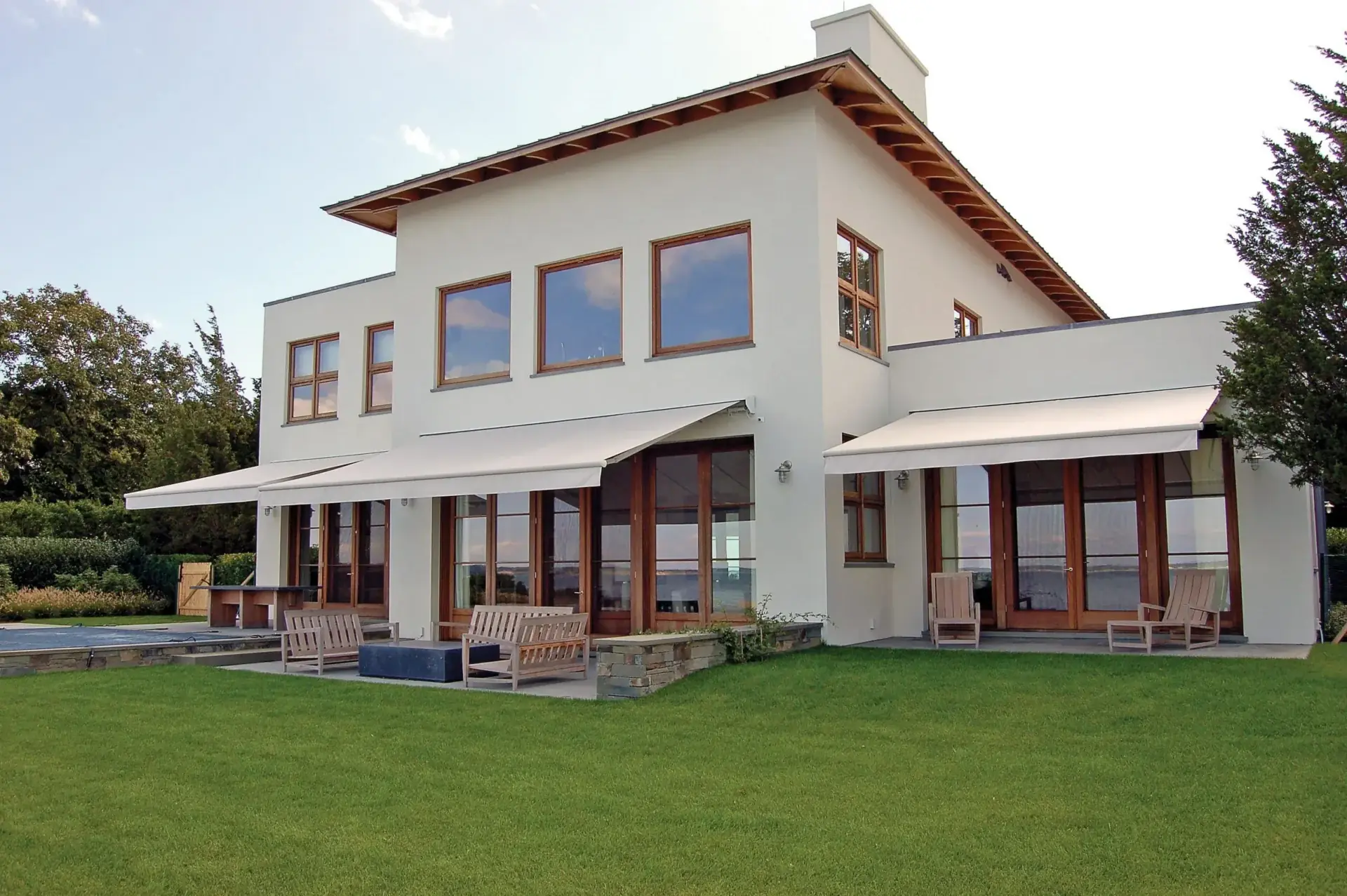
The Village (Zionsville's brick street core) Window Treatment in Zionsville, IN
Custom Zionsville window treatment crews serving The Village (Zionsville's brick street core) homeowners with free in-home measure, repair, replacement.
For this part of Zionsville, the recurring issues are afternoon glare on the west-facing side and privacy on anything close to the street. The answers below deal with both.
- Services: faux wood blinds, wood blinds, vertical blinds, aluminum mini blinds
- Service area: The Village (Zionsville's brick street core), Zionsville, IN and surrounding areas It depends what's broken. Hardware repairs on existing blinds and shades usually come together quickly. Replacing an entire custom product means starting the fabrication clock again, which is two to five weeks in most cases.
- Insured and bonded
- Serving Zionsville, IN since 2008
Local Window Treatment Experience in The Village (Zionsville's brick street core)
The Village is two markets on one street grid, and they get quoted differently. On Main Street there are roughly 170 businesses with full width storefront display glass, capped by ordinance at 75 percent of the ground level facade area, plus a transom band above it and tall narrow openings on the upper floors. Off Main, on Cedar, Pine, Hawthorne, Sycamore, Ash and Poplar, there are houses: Queen Anne Victorians with wrap around porches and towers, Craftsman bungalows and American Small Houses, mostly running eight to eighteen openings.</p><p style="font-size:16px;color:#4a5a6a;line-height:1.75;margin:16px 0 0">What both halves share is age. The recognized commercial fabric runs from 1854 to about 1920 and most of the Century Structures date 1880 to 1920, so the buildings here are between ninety five and a hundred and seventy years old. Nothing measures square, nothing repeats, and the head, the middle and the sill of a single opening will all give different numbers. Three point measurement isn't a nicety in this district. It's the only way to get a number worth ordering from.
We have served The Village (Zionsville's brick street core) homeowners through the full range of window treatment needs, from inspections and repairs to full replacements. Whatever the system, our Zionsville crew approaches every project with clear communication and respect for your property.
1854 to about 1930, with a century of infill on top
The Village core is the oldest fabric in Zionsville and it accounts for a meaningful share of the town's pre-1940 group, which is 3.7 percent of all housing units and roughly 445 of them. The oldest recognized commercial building is 75 N. Main Street, built in 1854 as a Methodist Episcopal church. Most of the 77 Century Structures date from 1880 to 1920. 65 East Cedar was listed on the National Register of Historic Places in 1983. The Century Structure walking tour currently runs 45 stops with 32 more planned.
The residential blocks are small platted village lots rather than subdivision lots. The Urban R-V zoning district that covers them caps lot coverage at 35 percent, sets front setbacks of 20 to 30 feet depending on street type, requires a 5 foot minimum side yard, and caps height at 35 feet or three stories. Its minimum floor areas of 650 to 900 square feet are the smallest anywhere in Zionsville. Village residential listings still run high, with 810 W Pine Street listed at $1,075,000 and 760 W Pine Street at $699,000.
The deepest and least consistent reveals in town
The commercial blocks are load bearing masonry, which gives generous reveal depth on the upper floors and almost none at the ground floor storefront in the same building. That's a real complication: one building can need two different mounting strategies on two floors, and a specification carried from the office upstairs to the shop downstairs won't fit. The upper openings are tall and narrow with real depth to work in. The storefronts are wide, shallow and continuous, with a transom band above that reads as part of the composition rather than as a separate window.
On the residential blocks the houses carry heavy original applied casing over plaster, which sounds like plenty of depth and often isn't, because later storm panel and insert work has frequently taken one to two inches of usable reveal. The shape vocabulary is polygonal bays, tower and turret glass, curved and stained panels, grouped Craftsman openings with wide trim, and entry transoms and sidelights. Great room glass doesn't exist here at all, since the two story great room postdates this fabric by about seventy years.
Nothing here is square
Between ninety five and a hundred and seventy years of settlement means every opening measures differently at head, middle and sill, and the diagonal usually confirms it. We three point measure everything and photograph existing conditions before removing anything, because on this fabric the casing is often part of why the house is worth living in.
Depth you can see is not depth you have
Heavy applied casing suggests a deep reveal, but many of these openings have had storm panels or inserts fitted at some point, and those eat one to two inches at the stop. We measure at the stop rather than at the face of the trim, and we ask about the history, because the answer differs house to house on the same street.
East and west, morning and evening
Main Street runs north to south through the five block core, so the commercial frontages face east and west and take direct low sun at opposite ends of the day. That's morning glare on the west side shopfronts and afternoon glare on the east side ones, landing raking across whatever is in the display window.
Two storefront specifications in one building
Ground floor display glass runs wide and shallow, capped by ordinance at 75 percent of the ground level facade area. The upper floors above it are tall, narrow and deep in load bearing masonry. They want different products, different mounts and, on motorized work, a surveyed radio path because masonry attenuates signal.
What we specify on each side of the glass
Two answers here, decided by the building rather than by taste. On the residential blocks the priorities are respecting original casing, working around lost reveal depth, and getting a straight line out of an opening that has moved. On Main Street the priority is glare on merchandise at a specific hour, plus the fact that anything on the outside of a commercial building is regulated and anything inside it isn't. We say which of those you're in before quoting.
Shutters fitted in a frame
On an opening that's been settling since around 1900, a shutter frame set plumb supplies the straight line the opening no longer has, and the deviation gets absorbed between the frame and the casing. It also suits the tall narrow proportions here far better than a wide horizontal product does, and it works where reveal depth is compromised.
Cafe height shutters
The R-V district's 20 to 30 foot front setbacks put these houses close to a sidewalk people actually use, and the sills sit higher than a modern window. A panel covering the lower portion breaks the sightline from the street and leaves the upper half doing what it was built to do, which matters in rooms that are modest and already short of daylight.
Interior solar shades on the storefronts
A 3 or 5 percent openness fabric behind display glass cuts the raking east or west sun off merchandise while keeping the window readable from the sidewalk. It's an interior product, so nothing in the Zionsville code reaches it, which makes it the fastest route to solving a Main Street glare problem without a filing.
Drapery hung above the casing
In a Queen Anne parlor, a rod mounted above heavy original trim with panels stacking beyond the opening leaves the casing fully visible rather than hiding it inside a mount. It also sidesteps the lost depth problem entirely. What it needs is wall space at each side for the stack, and anchors rated for the panel weight in plaster and lath rather than drywall.
Streets, landmarks and schools
Main Street is the brick street, laid in 1911 and rebuilt in brick between 1998 and 2003 rather than paved over. The residential blocks running off it are Cedar, Pine, Hawthorne, Sycamore, Ash, which was formerly Lebanon Street, and Poplar. 75 N. Main Street from 1854 is the oldest commercial building, 65 East Cedar has been on the National Register of Historic Places since 1983, and the Big-4 Rail Trail runs through the district. Everything else in Zionsville describes itself by how far it sits from here.
No HOA, no historic district, and one zoning section that matters
There's no homeowners association here. The Zionsville Village Residents Association is a voluntary residents group rather than a governing body. There's also no historic district, no historic preservation commission and no certificate of appropriateness anywhere in the codified town code, current through Ordinance 2025-08 of 17 March 2025: Title III Chapter 31 names fifteen town boards and commissions without a preservation commission among them, Title XIX Chapter 190 establishes only the Board of Zoning Appeals and the Plan Commission, and Zionsville isn't on Indiana DNR's Certified Local Government list. What does apply is zoning. Section 194.062, the Urban VBD district on the Main Street commercial frontage, prohibits metal, plastic and aluminum awnings and canopies outright, permits fixed and retractable ones that complement the building's style, materials, colors and details, caps projection at six feet where combined awning width on that facade is ten feet or less and four feet where it's more, requires nine feet of clearance above finished grade with a valance no lower than eight feet, and requires all window design to be compatible with the building's style, materials, color, details and proportion. Every VBD lot is subject to a development plan filed for Plan Commission review. Section 194.052, the Urban R-V district covering the residential blocks, is purely dimensional with no design review at all. And nothing anywhere in the code reaches interior window coverings.
Window Treatment Services in The Village (Zionsville's brick street core)
Every service Zionsville Window Treatments offers across Zionsville is available to The Village (Zionsville's brick street core) homeowners.
Faux Wood Blinds in The Village (Zionsville's brick street core)
The right slat for rooms that swing humid
Learn more →Wood Blinds in The Village (Zionsville's brick street core)
Real basswood, and only in rooms that stay conditioned
Learn more →Vertical Blinds in The Village (Zionsville's brick street core)
Sized by track width, drawn away from your door
Learn more →Aluminum Mini Blinds in The Village (Zionsville's brick street core)
Shallow depth, small stack, lowest cost per opening
Learn more →Roller Shades in The Village (Zionsville's brick street core)
One fabric, one tube, roll direction settled early
Learn more →Solar Shades in The Village (Zionsville's brick street core)
Specified from the sidewalk as well as the sofa
Learn more →Cellular Shades in The Village (Zionsville's brick street core)
The measured answer to a 20.9F January night
Learn more →Zebra Shades in The Village (Zionsville's brick street core)
One shade for the view at noon and cover at nine
Learn more →Roman Shades in The Village (Zionsville's brick street core)
Soft folds where the room is meant to be looked at
Learn more →Woven Wood Shades in The Village (Zionsville's brick street core)
Natural weave for windows that look at something
Learn more →Blackout Shades in The Village (Zionsville's brick street core)
Darkness is a mount decision before it is a fabric one
Learn more →Plantation Shutters in The Village (Zionsville's brick street core)
A frame that supplies the straight line the opening lost
Learn more →Cafe Shutters in The Village (Zionsville's brick street core)
Cover the sightline and keep the daylight
Learn more →Motorized Shades in The Village (Zionsville's brick street core)
Radio path surveyed before the quote, not after
Learn more →Custom Drapery in The Village (Zionsville's brick street core)
Fabric measured against the wall, not the opening
Learn more →Valances & Top Treatments in The Village (Zionsville's brick street core)
Priced by the run, proportioned to the room
Learn more →Exterior Solar Shades in The Village (Zionsville's brick street core)
Mesh on the outside, and a wind sensor with it
Learn more →Retractable Awnings in The Village (Zionsville's brick street core)
Fabric permitted, metal prohibited, projection capped by section
Learn more →Commercial Window Treatments in The Village (Zionsville's brick street core)
ADA reach ranges and NFPA 701 settled before product
Learn more →Skylight Shades in The Village (Zionsville's brick street core)
Tensioned channels and a power plan, settled before ordering
Learn more →Sliding Glass Door Blinds in The Village (Zionsville's brick street core)
Stack sits over the panel you never slide
Learn more →Panel Track Blinds in The Village (Zionsville's brick street core)
Wide openings, with the parked stack drawn on the quote
Learn more →Sheer Shades in The Village (Zionsville's brick street core)
Soft vanes for formal rooms, and honest about darkness
Learn more →Pleated Shades in The Village (Zionsville's brick street core)
Budget coverage across many openings, without the cell
Learn more →Bamboo Shades in The Village (Zionsville's brick street core)
Natural weave that needs a liner to be dark
Learn more →Dual Shades in The Village (Zionsville's brick street core)
Banded fabric on one tube, registration set level
Learn more →Top-Down Bottom-Up Shades in The Village (Zionsville's brick street core)
Daylight over the top, cover where the sidewalk is
Learn more →Cordless Blinds in The Village (Zionsville's brick street core)
No hanging cord, and the spring drift said out loud
Learn more →Hardwood Shutters in The Village (Zionsville's brick street core)
Real basswood, kept out of the rooms that ruin it
Learn more →Composite Shutters in The Village (Zionsville's brick street core)
Weight handled with a T-post before the panel sags
Learn more →Smart Home Shade Integration in The Village (Zionsville's brick street core)
Protocol chosen after the signal path is surveyed
Learn more →Blind Repair & Restring in The Village (Zionsville's brick street core)
Restring where it's honest, replacement where it isn't
Learn more →Shutter Repair in The Village (Zionsville's brick street core)
Match confirmed before a single panel is ordered
Learn more →Motorization Retrofit in The Village (Zionsville's brick street core)
Headrail assessed first, because not every one takes a motor
Learn more →Outdoor Patio Shades in The Village (Zionsville's brick street core)
Anchored into structure, retracted before the wind arrives
Learn more →Office Window Treatments in The Village (Zionsville's brick street core)
Openness factor set from where people actually sit
Learn more →Healthcare Window Treatments in The Village (Zionsville's brick street core)
Cordless and cleanable, documented in the submittal
Learn more →Multifamily Window Treatments in The Village (Zionsville's brick street core)
One spec per plan, and dye lots stated before phase two
Learn more →Who We Serve Near Zionsville
The Village (Zionsville's brick street core) is one of several Zionsville communities we serve. We measure and install across Zionsville, Boone County, and surrounding areas.
The Village (Zionsville's brick street core) Window Treatment FAQ
Questions we hear most often from The Village (Zionsville's brick street core) homeowners.
Free Assessment in The Village (Zionsville's brick street core)
Schedule a free, no-obligation window covering inspection. We respond promptly to all The Village (Zionsville's brick street core) inquiries.