Measuring Tall Windows: What Goes Wrong and How to Avoid It
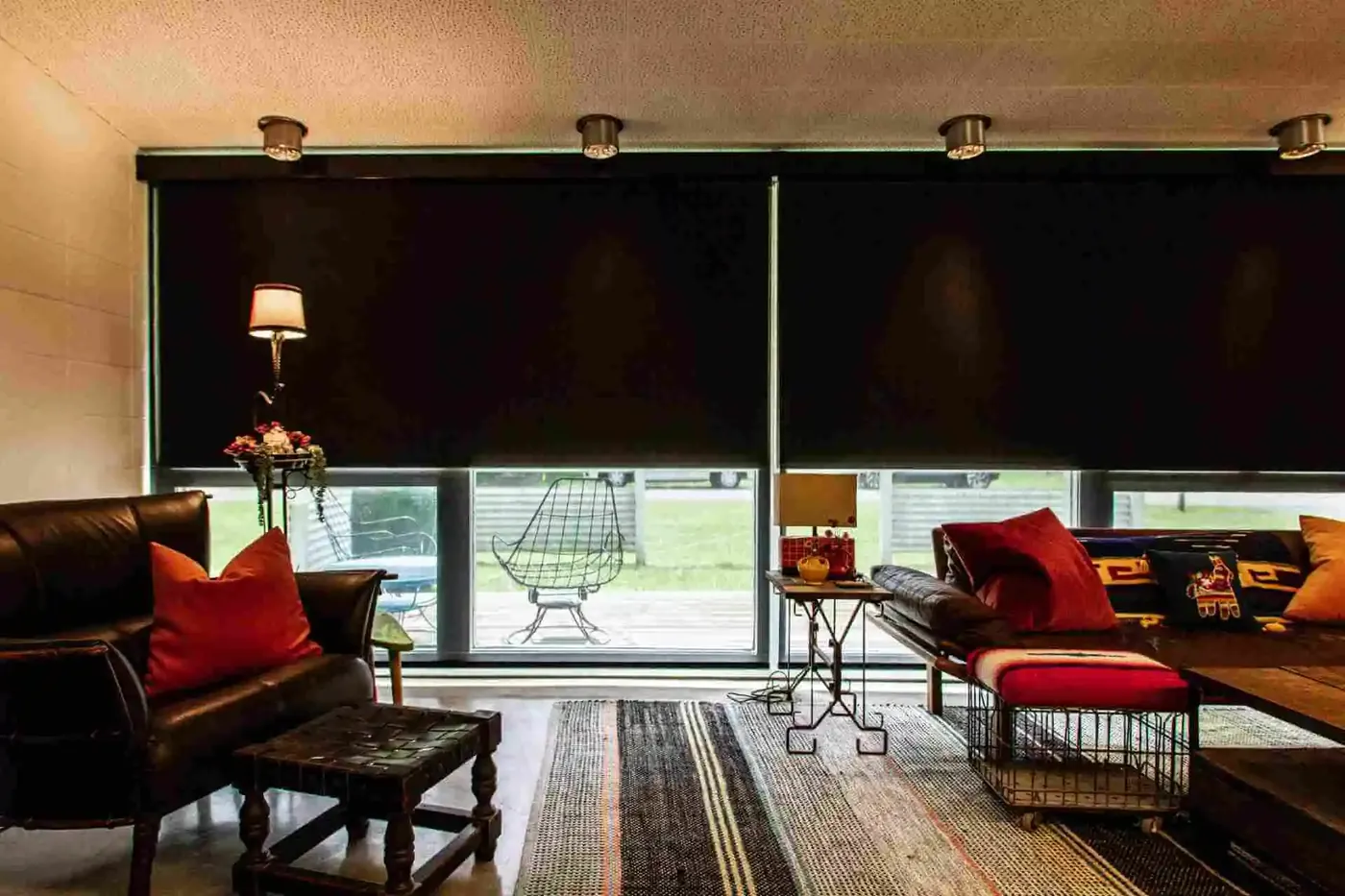
Covering a full wall of glass in a great room is a different budget conversation than a standard bedroom window, and it's worth understanding where the extra cost actually goes before getting a quote.
Why Size Pushes Hardware Past Its Limit
Cost on an oversized window starts with the hardware, not the fabric. Once a shade needs a heavier-duty clutch or a reinforced roller tube to stop mid-span sag, that's added cost before a single yard of fabric gets factored in, and it's the reason a big window rarely prices out as a simple multiple of a standard window's cost.
A Zionsville great room with a genuine wall of glass, ten or fifteen feet wide and eight or nine feet tall, is going to need that upgraded hardware almost by default, so it's worth budgeting for it going in rather than being surprised by it on a quote.
It's worth getting a written quote that separates hardware upgrades from fabric cost specifically, rather than one lump number, so you can see whether a given quote already accounts for the reinforced components a big window actually needs or whether that's going to show up later as a change order.
Where All That Fabric Goes When It Stacks
Motorization doesn't change where the fabric stacks when a shade is raised, that's still a function of the fabric and drop length, but it does make cassette-style headrails easier to justify, since a motor is already housed in the tube and a cassette keeps both the mechanism and the stacked fabric fully enclosed for a cleaner look.
A tall motorized shade with a well-planned cassette can raise almost out of sight, showing only a slim housing at the top of the window rather than a visible bundle of fabric, which matters on a Zionsville great room window where the shade is meant to disappear when it's not needed.
Retrofitting an older, non-motorized tall shade with a battery motor is possible in some cases, though it depends on whether the existing tube and mounting hardware can accept the retrofit motor's added weight and dimensions, which circles back to the same hardware question that comes up throughout an oversized installation.
One Shade or More Than One
A single shade covering a very wide expanse of glass runs into the same weight and deflection problems mentioned above, plus a practical one: fabric comes off the roll in a fixed width, so anything wider than that requires a seam, which shows as a visible line running down the shade. Splitting a wide window into two or three separate shades avoids the seam entirely and keeps each individual unit within a normal weight range.
The tradeoff is a visible gap or mullion line between shades where a single continuous shade would look unbroken. For a Zionsville window wall with actual vertical mullions already breaking up the glass, splitting the shades to match those existing lines looks intentional rather than like a compromise, which is usually the better call anyway.
Reaching the Control on a Window That Tall
Configuration and control interact more than people expect. Multiple shades across a wide window mean multiple control points unless they're motorized and grouped together, so a manual multi-shade wall means walking to each section individually to adjust it, which gets old fast on a window wall used daily.
This is often the deciding factor that pushes a split configuration toward motorization even when a single shade on a smaller window would have been fine manual. Grouping several Zionsville shades under one motorized control restores the single-shade convenience while keeping the hardware benefits of splitting the window into sections.
For a Zionsville household weighing the cost of motorizing a split configuration, it's worth remembering that the convenience gap between one remote-controlled wall of shades and several individually operated ones is larger than the price difference usually suggests, especially for anyone who'd actually use the window wall every day.
Measuring and Installing on a Window That Big
Squareness is the other big one. A window that's even slightly out of square, which is common on an older or custom-built opening, needs measurements taken at more than one height along the frame, not a single number applied top to bottom, and on a very wide window it needs checking side to side as well.
Skipping that step is how a shade ends up binding on one side or leaving a gap on the other once it's installed. A Zionsville installer measuring a tall or oversized window in person, checking multiple points and confirming access for both measuring and installing, catches these problems before they become an expensive reorder.
It's also worth checking the window's depth at the same time, not just its height and width, since some tall or custom windows have deeper trim or a wider sill that changes how much room an inside-mount bracket actually has to work with once everything else is factored in.
A window this size is worth measuring in person rather than estimating from a photo or a rough tape measure. A free in-home measure from Zionsville Window Treatments checks width and drop alongside access, then lays out real options before anything gets ordered.
Frequently Asked Questions
Why does measuring a tall window take longer than a standard one?
A standard window usually needs one width and one height measurement. A tall or oversized window needs measurements at more than one point along the frame, since it's more likely to be slightly out of square, plus a check on access for both the measure and the eventual install, plus a look at stack height and hardware requirements for that specific size. Each of those adds time but also prevents an expensive mistake later.
What happens if a shade is ordered without accounting for the window being out of square?
The shade gets built to the dimensions it was given, so if those dimensions didn't account for the window being slightly wider at the bottom than the top, or vice versa, the finished shade can bind against the frame on one side or leave a visible gap on the other. It's a common enough issue on older or custom-built openings that a careful measure checks for it specifically rather than assuming a single measurement is enough.
Do two-story or stairwell windows really need special equipment to measure and install?
Often, yes. A window that's not reachable from the floor or a standard ladder often needs a taller ladder or scaffolding to measure accurately and install safely, and that access requirement doesn't go away between the two visits. It's worth asking upfront whether a quote includes that access cost, since it can be a meaningful part of the total on a genuinely hard-to-reach window.
 Motorized or Manual: Choosing Shades for a Bay or Bow Window
 The Best Window Coverings for a Zionsville Kitchen Sink Window
 Should You Measure Your Own Windows in Zionsville, or Book the Free Measure?