What Cellular Shades Cost in Zionsville and What You Get
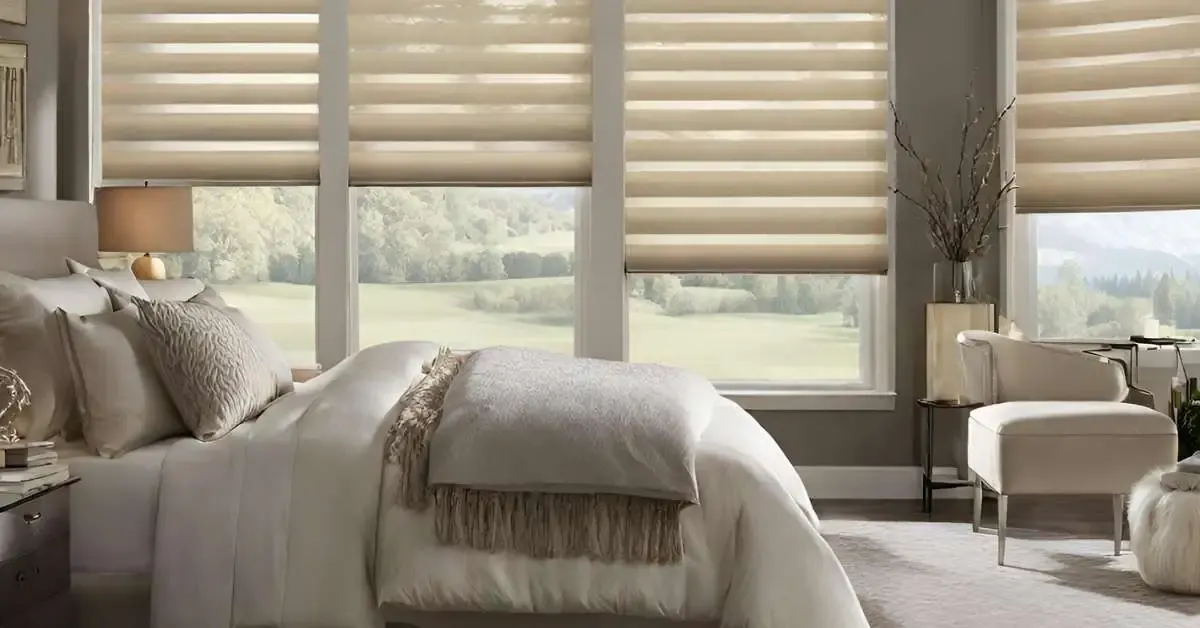
Most cellular shade disappointment in Zionsville traces back to an assumption nobody checked, that room darkening fabric alone makes a room dark, that double cell is worth it on every window, that a fast delivery date is automatically good news, or that a low quote is the same shade as a higher one. Here are the mistakes that show up most often, and what to ask instead.
What the Cells Actually Do
The reason a cellular shade costs what it does traces back to what it is built from. Pleated fabric gets folded into rows of hollow tubes, each one holding a column of trapped air, and that structure is what separates a honeycomb shade from a flat piece of fabric on a roller. Building rows of sealed tubes takes more material and more assembly than a single layer of cloth.
Glass is the weak point in a wall, radiating heat into a room in summer and pulling warmth out of the room air in winter, and the trapped air in a cellular shade sits directly in that path. Manufacturers publish an R-value for the product, the same kind of number used for insulation, and it climbs when you move from a single cell to a double cell, which is part of why double cell costs more.
What that buys a specific Zionsville house depends on the window and its orientation, so treat the R-value as real information rather than a guaranteed number on next winter's bill.
How the Shade Operates
Confirm cordless operation on every stock shade, since it is standard now rather than a paid upgrade, and ask why if a quote lists it as an extra line item. For a nursery or a kids room, confirm cordless without exception.
If you want top down bottom up on a bedroom or dining room window, get that written into the order along with the added cost, and understand upfront that the shade will never fully clear the opening once the top rail is lowered, since the fabric has to stack somewhere.
Before motorizing anything, ask about batteries specifically. Battery motors run roughly $100 to $300 a window less than hardwired based on national pricing, but confirm how often the batteries actually need replacing, commonly something like once a year under normal use, before deciding that is the cheaper option long term.
Opacity and the Light Gap
Cell count controls heat. Fabric opacity controls light, and the two get confused constantly. Light filtering fabric glows and gives daytime privacy without darkness. Room darkening fabric has an opaque liner built into the cell, so very little light passes straight through the face of the shade. You can order a double cell in light filtering or a single cell in room darkening, since the two choices are independent of each other.
Here is the part worth hearing before you order. Room darkening fabric does not make a dark room by itself, because the light that wakes people up comes around the shade rather than through it. An inside mount sits the shade inside the window opening, and the factory leaves a small deduction off the measured width so the shade fits and runs without rubbing. That deduction becomes a bright line down each side.
Side channels, light blocking pockets the shade edges run inside, close that gap completely. So does an outside mount with two to three inches of overlap, or a drapery panel layered over the top for a softer look.
Single Cell or Double Cell
Bedrooms and living rooms in most Zionsville homes do fine with a 9/16 inch single cell, the size that looks right in almost any room without calling attention to itself. Save double cell for the rooms working against real heat: a west facing wall, a bonus room sitting over a garage, a stretch of glass that makes the room uncomfortable by three in the afternoon, or any window that just runs hot no matter the season.
Watch stack height on short, wide windows over a built in or a low sill. A double cell in a 3/4 inch size stacks noticeably taller than a single cell in 3/8 inch once the shade is raised, and on a tall window nobody notices, but on a short one that stack eats real view.
A tall stairwell window wants a larger cell so you are not looking at dozens of tight pleats running the full height of the wall. A small bathroom window wants the opposite, since a large cell on a short opening looks coarse and out of proportion.
What Cellular Shades Cost
The costly mistake is assuming a next week delivery date on a custom cellular shade is good news. Real custom fabrication runs two to five weeks, since the shade is built to your measurements rather than pulled from a shelf. A shorter timeline usually means a stock size dressed up as custom, and a stock size can leave a wider light gap than you would accept on a shade built to your exact number.
Another mistake is comparing two quotes on price alone. Stock cellular shades run roughly $60 to $600 a window nationally, and custom shades run roughly $250 to $2,600 based on national ranges, and a big gap between two custom quotes for the same Zionsville house usually means one of them left something out: double cell, side channels, the operation type, or the mount style.
IN issues no license for this trade, and treating a claimed license as a mark of legitimacy is its own mistake here. Ask instead for a written contract with a firm price and a detailed scope, which is what the Indiana Home Improvement Contract Act actually requires for jobs over one hundred fifty dollars.
Cellular shades work best when someone explains the limits before you buy. There is a light gap on an inside mount. Double cell is thicker and stacks taller than single. Zionsville Window Treatments measures each opening in your Zionsville home and tells you what you will actually see. We are insured and bonded. Call (317) 863-9966 to get started.
Frequently Asked Questions
Is double cell worth the extra money?
On some windows, yes. Double cell puts two pockets of trapped air between the room and the glass instead of one, so it slows heat movement more. Save it for the openings that actually work hard, which usually means a west facing wall that takes afternoon sun, a room over a garage, a corner that runs drafty in winter, or a wide window with a lot of glass. On an interior hallway or a small bath, single cell does the same visual job for less. Double cell is also thicker and stacks taller when raised.
How much light comes in around an inside mount shade?
Enough to notice on a sunny morning. The factory takes a small deduction off your measured width so the shade fits and runs freely, and that deduction shows up as a narrow bright line down each side. The gap tends to grow on shades that are very wide or very tall, since the fabric has more room to wander as it winds. The fixes are side channels, an outside mount with two to three inches of overlap per side, a drapery layer over the top, or deciding you can live with it.
Do cordless shades wear out?
They age rather than fail. A cordless shade uses a spring in the headrail tensioned to hold the weight of the fabric, and springs relax over years. The symptom is a shade that slowly creeps down after you set it, and that's usually a tension adjustment inside the headrail rather than a replacement. The other common issue is racking, where the shade runs crooked because it's been lifted by one corner. Pull the bottom rail near the center and it stays square.
 The Best Window Coverings for a Zionsville Kitchen Sink Window
 Should You Measure Your Own Windows in Zionsville, or Book the Free Measure?